
The clock of the base: how geofences reveal the rhythm of field work
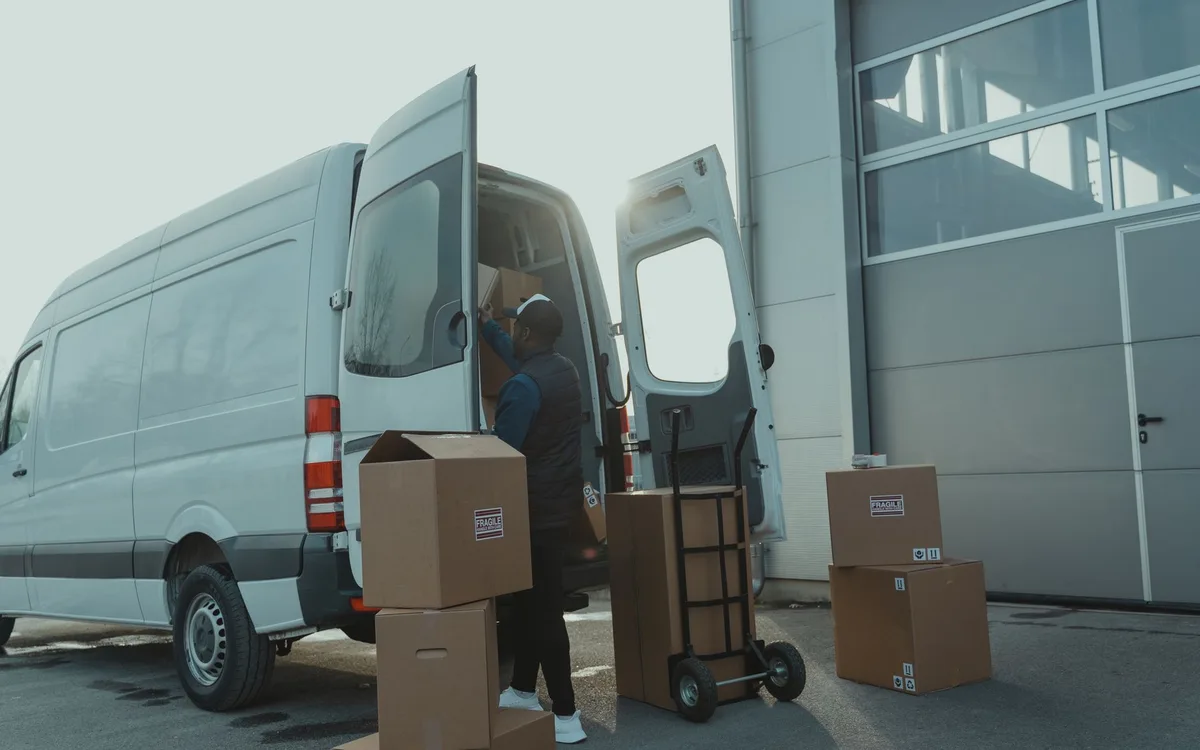
The base at 7:30am has a familiar rhythm: the vans fill up, the radios come on, the day’s orders get handed out. Around 8am, the entire operation crosses the gate headed “to the field.” Twelve hours later, the flow reverses — everyone comes back.
This out-and-back is the heartbeat of field work. And you can see it, hour by hour, in the geofences.
What a geofence is
A geofence (geofencing) is an invisible geographic perimeter: a base, a job site, a yard, a customer. When a worker crosses that boundary, the system logs an event — entered or exited. It’s the digital version of “clocking in,” except automatic and tied to real location. (See also geofencing in practice.)
The data: leaves in the morning, returns at night
We looked at 935,000 geofence events on the BiPTT platform. The pattern is unmistakable, and it’s the inverse of the office. (Full chart in the report The state of frontline communication.)
At the office, you arrive in the morning. In the field, you leave.
- Base departures cluster at the start of the day — peaking between 8am and 9am.
- Entries (returns) cluster in the late afternoon — peaking between 6pm and 7pm.
Plotted on the same chart, the two lines tell the whole day: the operation leaves base early, spends the day in the field, and returns at night. Out to work, back home.
What you can manage with this
A geofence isn’t just a dot on the map. It’s management information:
- Presence — who’s at the base, the job site, the customer, right now.
- Time in the field — how long the team actually spent out, no spreadsheet or phone call.
- Arrival and departure — automatic logging, no “let me know when you get there.”
- Safety — and when someone hasn’t come back? The geofence is the first signal. Also useful for guard tour control and proof.
- Allocation — who’s closest to the next job.
Geofencing and communication, together
Here’s the real trick. Locating is half the value. The other half is acting on the location.
When geofencing and communication live in the same tool, the manager doesn’t just see who’s where — the manager talks to whoever is in the right geofence at the right time. “Team that just reached job site 3: the delivery is running 40 minutes late.” Context and action, in the same place.
Your operation already has a clock. Geofences just make it visible — and actionable.
Want to see the rhythm of your operation? Explore geofencing and tracking in BiPTT and turn location into management — or see the numbers in the report The state of frontline communication.
Frequently asked questions
What is a geofence (geofencing)?
It's an invisible geographic perimeter around a base, job site, or customer. When a worker crosses the boundary, the system automatically logs an entry or exit — useful for proving patrols, measuring time in the field, and for safety.
How does the rhythm of leaving and returning to base help with management?
BiPTT data on 935,000 geofence events shows that base departures cluster in the morning (8-9am peak) and returns in the late afternoon (6-7pm). This pattern lets you see presence at base/job site, real time in the field, arrivals and departures without a phone call, and safety signals (who hasn't come back).
Do geofencing and communication work together in BiPTT?
Yes. On the same platform, the manager not only sees who is in each geofence but talks to whoever is in the right place at the right time — context and action in the same place.