
The Military Phonetic Alphabet beyond borders: Practical applications
The military phonetic alphabet, also known as the NATO phonetic alphabet or the International Radiotelephony Spelling Alphabet (IRSA), is a system of standardized phonetic words used to spell out the letters of the English alphabet. It is used mainly in military and aviation contexts, as well as in other professions where clear and precise communication is vital.
The military phonetic alphabet assigns a unique word to each letter of the alphabet to minimize confusion and ensure the accurate transmission of information, especially when dealing with difficult or similar-sounding letters. The standard NATO version of the military phonetic alphabet is as follows:
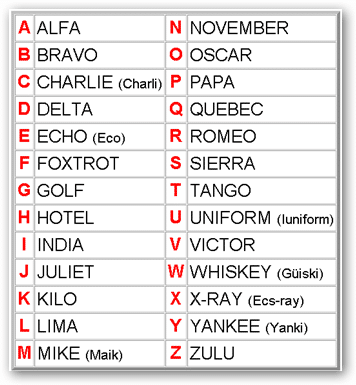
By using these standardized phonetic words, communication becomes clearer, especially in situations where radio or telephone transmissions may suffer from static, distortion, or language barriers. The military phonetic alphabet ensures that letters are easily distinguishable, reducing the risk of errors or misunderstandings.
Summary
- How to use the military alphabet in practice
- Learn the phonetic alphabet:
- Spell out words or names:
- Emphasize each letter:
- Repeat if necessary:
- Use context when necessary:
- Practice and memorize:
- How did it come about?
How to use the military alphabet in practice

Using the military phonetic alphabet in practice can be useful for clear and precise communication, especially in situations where spelling out words or names is essential. Below is a step-by-step guide on how to use the military phonetic alphabet effectively:
Learn the phonetic alphabet:
Familiarize yourself with the standard NATO phonetic alphabet, which is commonly used around the world. The alphabet consists of 26 words, each representing a letter of the English alphabet, such as Alpha, Bravo, Charlie, Delta, and so on.
Spell out words or names:
When you need to convey a word or name over the phone or radio, use the phonetic alphabet to spell it out letter by letter. For example, if you need to spell out “OpenAI”, say “Oscar, Papa, Echo, November, Alpha, India”.
Emphasize each letter:
Speak each letter clearly and distinctly, emphasizing the phonetic word associated with it. This helps avoid confusion and ensures accurate understanding.
Repeat if necessary:
If the recipient does not understand a particular letter, do not hesitate to repeat it using the phonetic alphabet. This repetition helps ensure that the correct information is received.
Use context when necessary:
In some cases, it can be helpful to provide additional context along with the phonetic spelling. For example, you might say “Bravo, as in ‘B’ for Bravo” or “India, as in ‘I’ for India”. This can aid understanding, especially when dealing with less familiar words or names.
Practice and memorize:
Practice using the military phonetic alphabet regularly to reinforce your familiarity and fluency. The more you use it, the more comfortable you will become, allowing for smoother and more efficient communication.
It is important to remember that the military phonetic alphabet is not limited to the military; it can be used by anyone who wants to ensure clarity in communication, especially in situations where accuracy is crucial, such as emergency services, aviation, or other professional fields.
How did it come about?
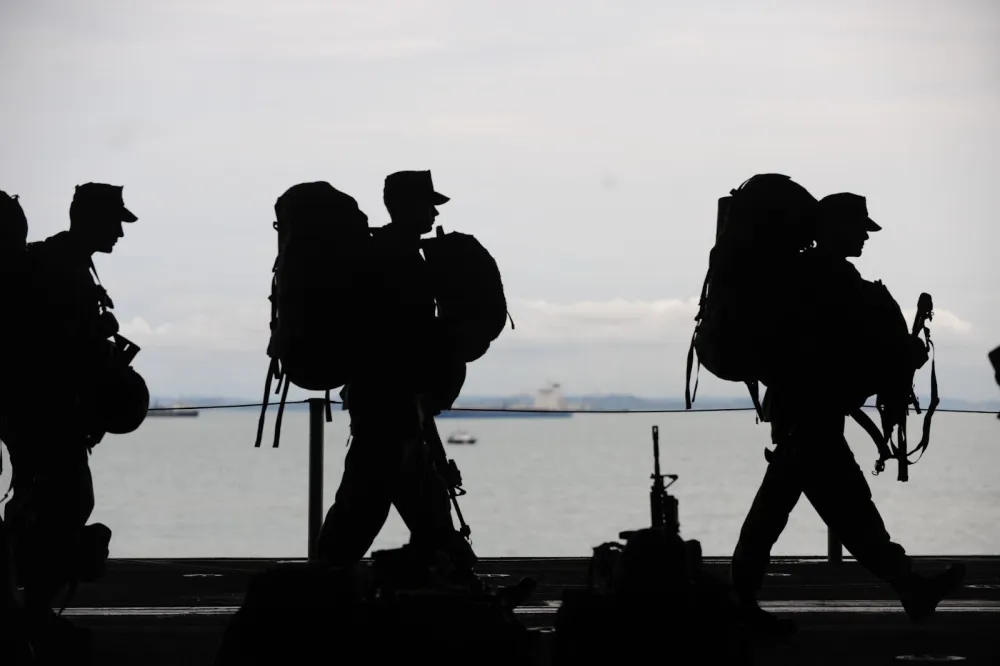
The origins of the military phonetic alphabet date back to the early 20th century, when the military recognized the need for a standardized system to spell out letters in wireless communication systems. Before the introduction of the phonetic alphabet, various ad hoc methods were used, including simple English words or regional variations.
The need for a consistent and internationally understood system became apparent during World War I, when military forces from different countries had to communicate effectively across language barriers and in noisy or chaotic environments. In 1927, the International Telegraph Union (ITU) established a committee to develop an internationally recognized phonetic alphabet.
The commission, made up of representatives from different countries, including military and civilian experts, worked to create a set of words that would represent each letter of the alphabet clearly and distinctly. The resulting phonetic alphabet was adopted by the ITU in 1927 and later by the International Civil Aviation Organization (ICAO) in 1956. It was subsequently endorsed by NATO in 1957 and became known as the NATO phonetic alphabet.
Over time, minor modifications and adaptations were made to the phonetic alphabet to accommodate specific languages and regional variations. However, the core set of words remained largely consistent across different countries and organizations, ensuring interoperability and effective communication.
This alphabet continues to be widely used today in the armed forces, aviation, emergency services, and various professional fields, providing a standardized and efficient way to spell out letters and ensure accurate communication, especially in situations where clarity and understanding are critical.
Now that you know the origin and applications of the military phonetic alphabet, and that its main purpose is to maintain clear and objective communication in risky situations, the importance of a good real-time communication tool becomes evident. After all, there is no point in employees making an effort if the tool does not cooperate.
A good Push To Talk (PTT) communication software can easily fulfill this role and ensure that communication is clear and free of noise or interruptions.
Discover the Push To Talk of the future and see how to ensure transparent and effective communication across your team.
Does your team use radios? Turn their phone into a professional radio.
BiPTT takes instant communication beyond radio range — voice, location and central management, wherever there’s 4G or Wi-Fi.