
Q codes: the most used in radio and comms
Q codes are part of radio communication history and, even with technological progress, they remain present in security, logistics, surveillance and amateur radio operations, and even in virtual environments such as GTA RP.
But are they still necessary in modern communication solutions like BiPTT, a Push-to-Talk software that turns smartphones into professional radios?
In this article, you will understand the origin of Q codes, see a complete list for quick reference, discover how they appear in games and real operations, and understand how BiPTT facilitates, and even replaces, many of the functions that used to depend on these codes.
Contents
- What Q codes are and why they are still essential
- List of the most-used Q codes and their meanings
- Variations for police, security and guards
- Variations in GTA RP
- Complete Q codes: full table for quick reference
- How Q codes appear in games (GTA RP)
- Q codes in security and surveillance
- How BiPTT replaces and modernizes traditional radio communication
- BiPTT features that boost communication
- When to use Q codes in BiPTT
- BiPTT
What Q codes are and why they are still essential
Q codes emerged in the early 20th century as a standardized form of communication in telegraphy and radio. They served to speed up messages, avoid ambiguity and ensure that operators speaking different languages could communicate quickly.
Over time, they were adopted by:
- Security and surveillance teams
- Police and tactical forces
- Amateur radio operators
- Logistics professionals
- GTA RP players
- First responders and emergency teams
Despite technological advances, Q codes are still useful for two main reasons:
- Speed: They transmit long messages using only three letters.
- Standardization: They allow different teams to communicate by speaking the same “operational language.”
List of the most-used Q codes and their meanings
Below are some of the most common codes in Brazil:
- QAP – Listening / On standby
- QRA – Name / Identification
- QRB – Distance
- QRC – Forward for backup
- QRD – Direction
- QRG – Frequency
- QRH – Frequency variation
- QRL – Busy
- QRM – Man-made interference
- QRN – Natural interference
- QRO – Increase power
- QRP – Reduce power / Low volume
- QRU – Nothing to report
- QRV – Ready to operate
- QRT – End communication
- QRX – Wait
- QRY – Queue order / priority
- QRZ – Who is calling?
- QSA – Signal strength
- QSL – Message received
- QSM – Repeat message
- QSO – Contact / communication established
- QSY – Change channel/frequency
- QTH – Location
- QTU – Hours of operation
Variations for police, security and guards
In this sector, some codes take on specific interpretations, such as:
- QSL Positive – Confirmed
- QRT Local – End operation in a given area
- QTH 0 – Safe location
- QTH +1, +2, +3 – Priority/risk levels
Variations in GTA RP
On roleplay servers, Q codes were adapted to make communication faster and more immersive:
- QAP – Listening
- QSL – Confirmed
- QTH – Player location
- QRU – No incidents
- QRT – Log out or end action
- QRR – Roleplay backup request
Complete Q codes: full table for quick reference
(Adapt here as you wish to insert a visual table on the blog.)
Having a complete table on the blog increases reader retention, favors SEO and serves as a quick reference for operational teams and players. It also shows authority on the topic and improves ranking for terms such as “Q codes” and “Q code list.”
How Q codes appear in games (GTA RP)
In GTA RP, Q codes improve the communication dynamics among police officers, paramedics, guards and criminals within the game.
They create realism, standardize actions and make roleplay more professional.
The most organized servers use official lists, training and even penalties for those who use the wrong codes.
Q codes in security and surveillance
In real life, guards and security teams use Q codes to keep communication discreet and efficient. Common situations include:
- Suspicious movement (QSL + QTH)
- Request for support (QRR)
- Operation in progress (QRV)
- Incidents resolved (QRU)
Even so, many of these codes become unnecessary when there are tools with real-time monitoring and call history, such as BiPTT.
How BiPTT replaces and modernizes traditional radio communication
With the advance of Push-to-Talk over Cellular (PoC) technologies, BiPTT overcomes many of the limitations of conventional radios.
BiPTT features that boost communication
- Real-time geolocation (eliminates manual QTH)
- Call recording and history
- Team monitoring on maps
- Individual, group or general calls
- Unlimited communication over 4G/5G/Wi-Fi
- Superior audio quality
- Stable signal, no interference (QRM/QRN)
- Optional physical PTT button via accessories
With these features, many Q codes become unnecessary, because the manager sees everything in real time, without the team needing to verbalize location or status.
When to use Q codes in BiPTT
Even with advanced technology, Q codes can still be useful when:
- The team is already trained in this standard
- The operation requires extremely fast communication
- It is necessary to maintain discretion
- There is integration with conventional radios
In other words: BiPTT does not eliminate Q codes, it complements and modernizes them.
BiPTT
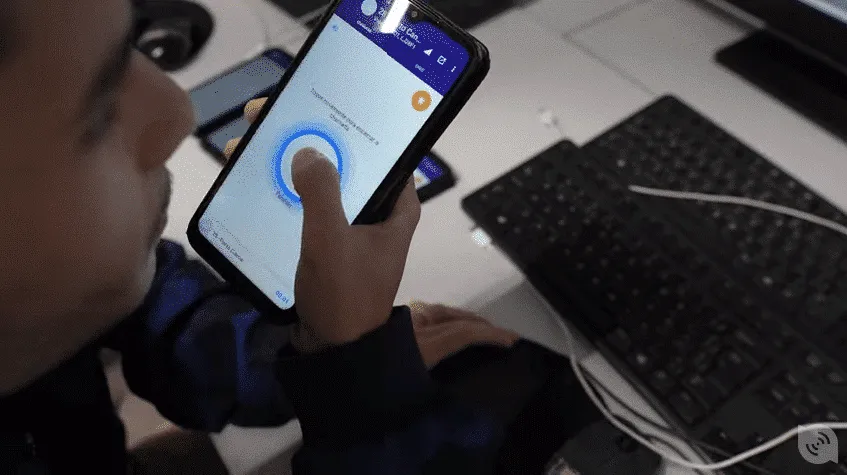
Q codes remain a fundamental part of tactical communication, whether in security, logistics or even GTA RP. However, when combined with modern technologies like BiPTT, they become even more efficient, and many of their limitations disappear.
If you want to improve your team's communication, gain agility and replace traditional radios with a modern, secure and scalable solution:
👉 Visit the BiPTT website and request a demo right now!
Want to know more about this innovation? Visit our website.
Read also: