
The Impact of Technological Innovations on Prehospital Care
The digital era has brought with it a revolution in prehospital care (PHC), thanks to telemedicine, remote monitoring devices, and mobile apps.
These new technologies are reshaping the healthcare system by making care more efficient and higher in quality.
Summary
- The impact of telemedicine on PHC
- Remote Monitoring Devices: Medical Care at Your Fingertips
- How Mobile Apps Are Improving PHC
- The era of Telemedicine in PHC
- Remote monitoring devices: Enhanced efficiency
- Mobile apps and the revolution in PHC
- Telemedicine and Mobile Apps: A combination for better care
- The benefits of mobile apps in PHC
- Mobile apps for remote monitoring
- Telemedicine: Revolutionizing Prehospital Care
- The role of Remote Monitoring and Mobile Apps in improving PHC
- Integrating Technology into PHC
- Telemedicine in PHC
- Remote monitoring devices
- Mobile Apps for PHC
The impact of telemedicine on PHC
Telemedicine has proven to be a powerful vehicle for improving prehospital care. This phenomenon emerges as a response to the limitations of traditional medicine, providing effective and immediate emergency clinical care.
It is changing the way health services are delivered, eliminating the barrier of distance and enabling the continuous monitoring of patients. In emergency situations, healthcare professionals can now provide guidance through videoconferencing, reducing response time and, consequently, saving more lives.
Remote Monitoring Devices: Medical Care at Your Fingertips
Moving beyond telemedicine, remote monitoring devices are playing a central role in digital health. These devices enable the constant monitoring of critical patients, providing vital data in real time to healthcare professionals.
This means it is possible to detect any changes early and, consequently, intervene immediately if necessary. Remote monitoring also gives patients more independence, since they can remain at home during treatment or recovery.
How Mobile Apps Are Improving PHC
Mobile health applications are gaining popularity due to their convenience and easy access. These apps are designed to provide health information, read and interpret test results, assist in scheduling medical appointments, and remind users to take their medications.
In addition, emergency apps are facilitating fast and efficient communication between first responders and hospitals, ensuring that patients receive the right care in the shortest possible time.
The evolution of health technology continues to have a significant impact on prehospital care. Not only is it improving the quality of medical care, but it is also making the healthcare system more efficient and effective. Technological innovations are transforming PHC, improving health outcomes and saving lives.
The era of Telemedicine in PHC
In recent years, telemedicine has stood out as an essential technology for supporting prehospital care (PHC). Through this technique, a physically distant physician can provide consultations and guidance, eliminating the need to be physically present.
This translates into shorter response times, saving lives in emergency situations such as accidents and acute illnesses.
In addition, the use of telemedicine in PHC enables better triage of cases, directing patients to the most appropriate health service, avoiding overcrowding and improving the management of healthcare resources.
This creates a more efficient care environment, where the physician can stay updated on the patient's situation in real time, allowing for continuous and coordinated follow-up.
Remote monitoring devices: Enhanced efficiency
Remote monitoring devices have taken the delivery of PHC services to a new level. These devices, which can include vital sign monitors and wearables, are capable of transmitting the patient's health data in real time to the medical team.
This technology, when combined with the power of telemedicine, allows healthcare professionals to monitor patients remotely, adjust treatments, and make informed decisions more quickly.
This not only increases the efficiency of care but also contributes to a better quality of care. The data collected through remote monitoring provides valuable insights into the patient's health status, enabling more precise and personalized interventions.
Mobile apps and the revolution in PHC
Mobile apps are another technological innovation that has been transforming prehospital care. Apps that provide access to medical records, guidance for CPR (cardiopulmonary resuscitation), and support for patient triage are becoming increasingly common.
They enable faster and more effective communication between the care team and emergency services, which can mean the difference between life and death in critical situations.
In addition, these apps allow patients to better manage their health, actively participating in treatment and having easy access to information. This contributes to greater patient satisfaction while increasing the efficiency of the health service.
Telemedicine and Mobile Apps: A combination for better care
In recent years, the healthcare industry has been transforming enormously thanks to the emergence of new technologies. Among them, the growth of telemedicine and mobile apps stands out. Prehospital Care (PHC) companies are increasingly adopting these technologies to improve the efficiency and quality of medical care.
Telemedicine allows physicians to provide high-quality medical care to urgent patients, regardless of where they are located. Mobile apps are the bridge that streamlines this remote communication, enabling constant monitoring and easy access to medical assistance when needed.
The benefits of mobile apps in PHC
Mobile apps promote secure and instant communication between patients or first responders and healthcare professionals, allowing easy access to urgent medical guidance.
Popular tools in these apps include GPS location, transmission of patients' vital data, and live videoconferencing. They can also be customized to integrate seamlessly with other hospital systems, for a more efficient exchange of information.
In addition, the apps offer the advantage of speeding up the PHC process, since healthcare professionals can begin assessing the situation even from a distance. They allow PHC teams to be better prepared for specific cases when they arrive on site.
Mobile apps for remote monitoring
Another innovation that makes use of mobile technology is remote patient monitoring. Remote monitoring devices are synced with mobile apps to record the patient's health data in real time, such as heart rate or blood pressure.
This technology is crucial, especially in critical cases, offering a faster response time and improving the effectiveness of care.
In addition, remote monitoring devices can alert physicians and prehospital teams to any abnormality. This enables faster interventions that can save lives and also reduce hospitalization time.
In conclusion, mobile technology not only makes life easier for medical professionals in PHC companies but also improves the efficiency and quality of patient care. The adoption of telemedicine and mobile apps in medical practice is a major step toward the future of healthcare.
Telemedicine: Revolutionizing Prehospital Care
The adoption of telemedicine is one of the main technological innovations that has been transforming Prehospital Care (PHC). This technology allows physicians and patients to interact remotely, regardless of the patient's geographic location.
Physicians can offer consultations, diagnoses, and treatment recommendations virtually, a resource that has proven particularly useful in remote areas where access to medical care is limited.
In addition, telemedicine can improve the efficiency of PHC by allowing healthcare professionals to triage patients quickly and decide the best course of action even before the PHC team arrives on site.
The role of Remote Monitoring and Mobile Apps in improving PHC
Remote monitoring devices are another example of how technology is enhancing PHC. These devices allow healthcare professionals to continuously track patients' health conditions from a distance.
Patients with chronic illnesses, such as diabetes or heart disease, can be monitored remotely, allowing abnormalities to be detected and treated quickly, improving the quality and effectiveness of PHC.
Likewise, mobile apps are increasingly being used in PHC. There are apps that facilitate communication between the PHC team and the hospital, apps that offer treatment guidelines, and even apps that can contribute to the continuing education of PHC professionals.
These technological resources improve the efficiency of teams, providing instant access to vital information and guidance, which in turn can lead to better patient care.
Integrating Technology into PHC
Incorporating these technological innovations into PHC is not just a trend, it is a necessity. Together, telemedicine, remote monitoring, and mobile apps have the potential to considerably improve the quality of care provided by PHC companies.
However, it is important to emphasize that the successful implementation of these technologies requires proper training and the adaptation of existing practices to ensure they are used effectively and safely.
Telemedicine in PHC
Telemedicine has emerged as a revolutionary force capable of significantly altering the delivery of prehospital care (PHC) services. Through telemedicine, physicians can use technology to remotely examine patients, analyze symptoms, assess vital data, and even prescribe treatments.
PHC companies that have incorporated this technology have seen considerable improvements in the efficiency and accuracy of patient care.
Care providers are able to triage and direct patients to the appropriate level of care using virtual medical assessment. Evidently, this reduces response time and improves patient outcomes.
Remote monitoring devices
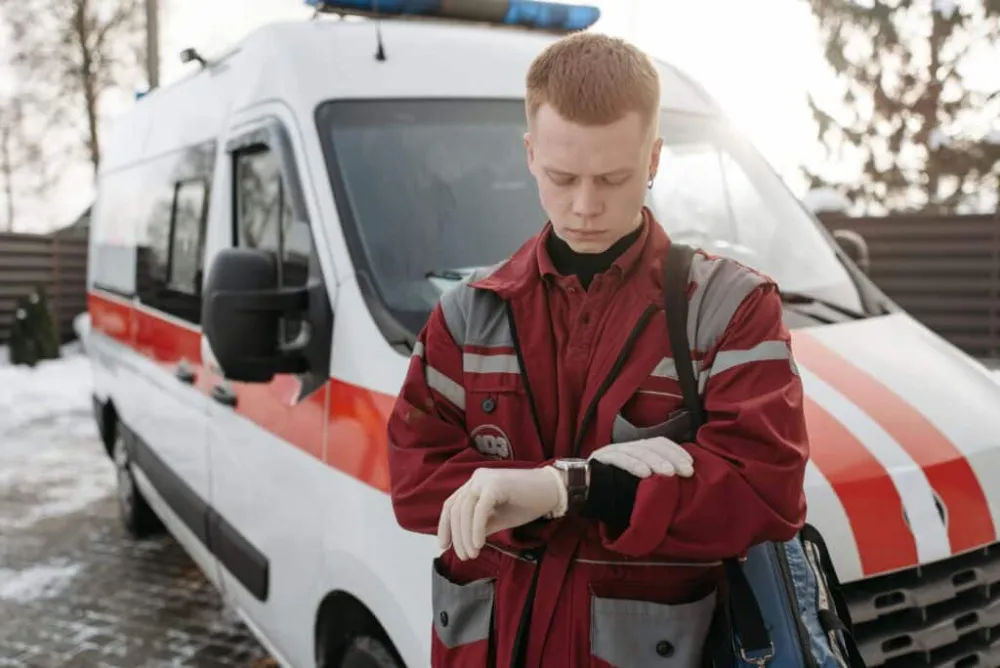
Remote monitoring devices are another technology that is reshaping the prehospital care landscape. These devices allow healthcare professionals to monitor patients from a distance, providing a faster response to changes in the patient's condition.
PHC companies that have adopted these devices have found ways to improve the quality of care, since they provide vital data in real time, which can alert emergency teams to critical situations even before arriving on the scene.
An example of a common remote monitoring device is the automated external defibrillator (AED), which can be monitored remotely to identify cardiac arrhythmias that require immediate medical intervention.
Mobile Apps for PHC
Last but definitely not least are mobile apps, which play a fundamental role in the modernization of prehospital care.
Mobile apps can provide quick access to treatment guidelines, assist in locating the nearest hospital, enable fast and efficient communication between field teams and hospitals, as well as offer real-time reporting and tracking capabilities.
These functions simplify workflow, reduce documentation overload, and improve the coordination of care. PHC companies that adapt to these technological innovations can expect not only to improve the efficiency and quality of care but also to stay competitive in a dynamic and constantly evolving healthcare environment.
Want to learn more about this innovation? Visit our website.
Read also:
Understand the legislation for PHC companies better
PHC: How to reduce response time and save lives?