
Why the frontline chooses voice: 85% of messages are audio
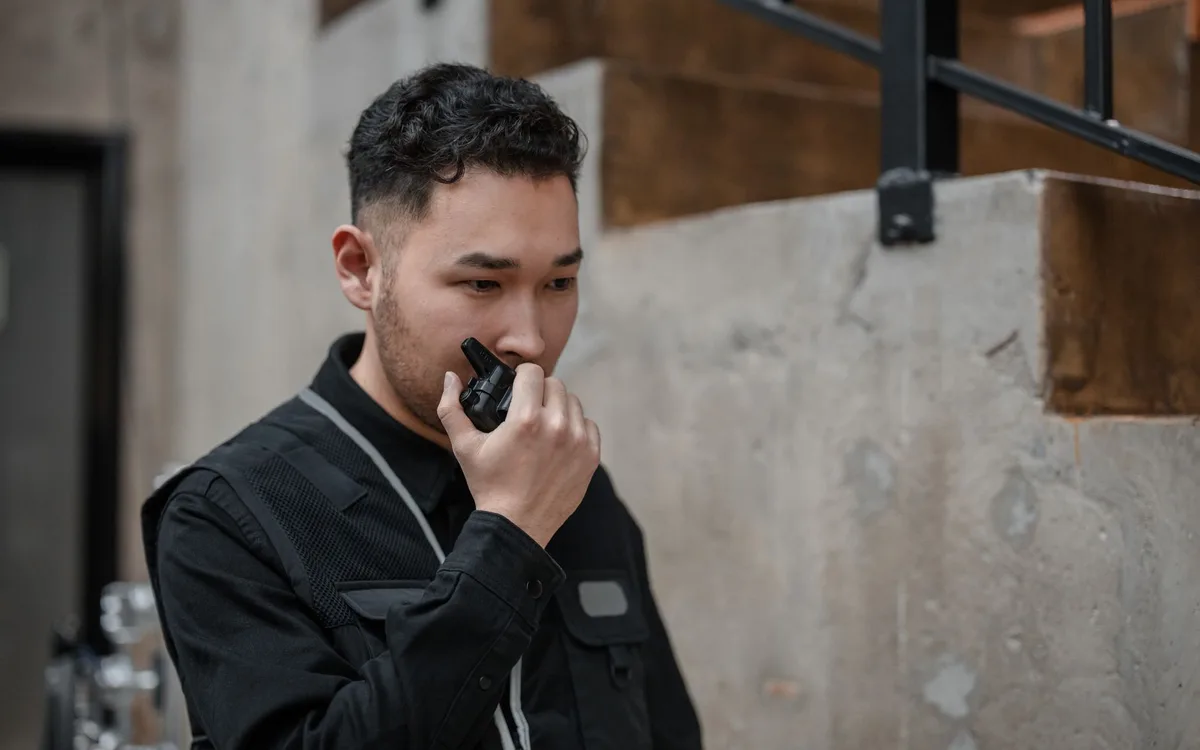
In a factory, on a construction site, on an overnight patrol, nobody stops to type. Their hands are on the tool, on the wheel, on the flashlight. Field communication has a physics of its own — and it runs in the opposite direction from the office.
While the corporate world migrated to chat, the frontline went the other way: it chose voice. And that’s not an opinion. It’s what the data shows.
85% of field communication is voice
We measured how real field teams communicate on the BiPTT platform: 91.5 million messages, aggregated and anonymous. The math is straightforward. 77.7 million are Push-to-Talk (PTT) audios — 85% of the total. Text? 9.4 million, or 10%.
That’s roughly 8 audios for every written message.
This isn’t a timid preference. It’s an overwhelming choice, repeated millions of times by the people who work on the street, in the warehouse, at the post. (The full numbers are in the report The state of frontline communication.)
Why voice wins in the field
The reason is practical, not technological.
- Hands full. Someone wearing a glove, holding a box, or operating equipment doesn’t type. But they can talk.
- Speed. Typing a sentence takes 20 seconds. Speaking it takes 3. In field coordination, every second counts.
- Context. Voice carries urgency, tone, who’s speaking. “I need it now” reads differently in writing.
- Inclusion. Not every worker types fast. Everyone talks. Voice leaves no one behind.
Press a button and speak. That’s how the field has communicated for decades — first on the two-way radio, now on the phone, with Push-to-Talk over the cellular network (PTToC).
Where text still earns its keep
Honesty matters: the 10% that’s text isn’t noise. It has a job.
Text is good for what needs to be on the record or exact: an address, a serial number, a link, a written confirmation. And images serve as evidence — the photo of the problem is worth more than a description of it.
The point isn’t “voice or text.” It’s voice first, text in support. The operation talks; it writes down what needs to persist.
What this changes when you pick a tool
A chat tool was designed for text. Voice comes in as an attachment — an audio file someone records, sends, and the other person downloads. It works, but it models the wrong case.
A PTT tool was designed for voice. It is the channel, not the attachment: always open, one tap, reaching everyone at the same time. It’s the difference between adapting the office for the field and giving the field the field’s own tool.
The frontline has already voted. Eight to one.
Want to see how it works in practice? Explore BiPTT Push-to-Talk — the voice communication your operation is already asking for. Or dig into the full numbers in the report The state of frontline communication.
Frequently asked questions
How do frontline teams communicate?
According to production data from the BiPTT platform (91.5 million messages, aggregated and anonymous), frontline communication is overwhelmingly voice: 85% of messages are push-to-talk audio — about 8 audios for every text — with a median duration of 3 seconds, and 79% happen in a group (broadcast), not 1:1.
Why does the frontline use more voice than text?
Because people working in the field have their hands full — a glove, the wheel, a patrol — and they don't type. Pressing a button and speaking takes about 3 seconds; typing the same information takes much longer. It's a practical choice, repeated millions of times.
Does text still have a role in field communication?
Yes. About 10% of messages are text, useful for what needs to be on the record or exact — an address, a serial number, a link — and images serve as evidence. The pattern isn't 'voice or text,' it's voice first, text in support.