
Federal Police: Discover the 12 rules used by security guards
Every action involving public and private protection must follow rules and a strict operating procedure. With Federal Police security guards it could not be any different: a preparatory course is given covering all the documented protocols.
Based on the Security Guard Manual, we have gathered the 12 rules it contains so that you can understand how they can be replicated and adapted for your company. We also cover the coded language and radio communication that these professionals use so often.
Summary
- Learn the 12 rules used by security guards
- 1. Answer on the first ring
- 2. Do not say “HELLO”. Identify yourself
- 3. Avoid keeping the caller waiting
- 4. Answer in the best way, saying only what is necessary
- 5. Make or transfer your calls yourself
- 6. Use your internal phone directory
- 7. Do not use a pencil or pen to dial
- 8. Do not rely on your memory
- 9. Avoid abrupt interruptions
- 10. Be careful with terminology and confidentiality
- 11. Do not use undesirable expressions
- 12. End the conversation cordially
- Applying the Q Code
- Table of the Q code used by police, navy and air force:
- How do security guards use radio communication?
Learn the 12 rules used by security guards
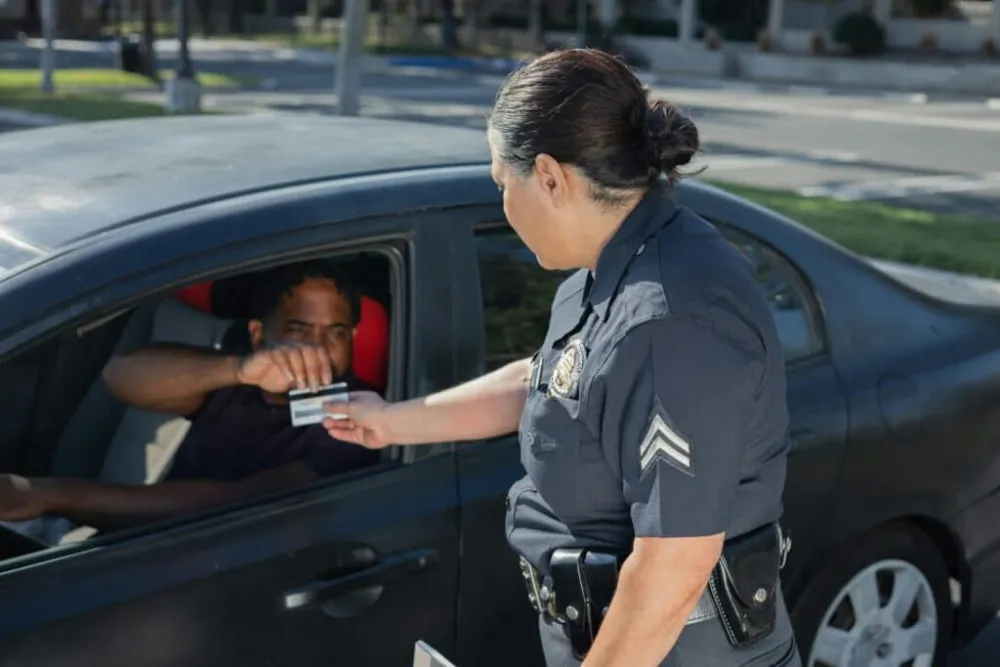
1. Answer on the first ring
To show more attention, proactivity and efficiency, do not keep the contact waiting too long to be attended to.
2. Do not say “HELLO”. Identify yourself
Always state the company name, followed by a “good afternoon” or another similar greeting. For an internal call, you should give the department and, lastly, your name.
3. Avoid keeping the caller waiting
If you cannot resolve the request at that moment, always check whether the caller can wait or prefers to call again in a few minutes. You must not leave the call without an explanation. You can also take down the number and call back later.
4. Answer in the best way, saying only what is necessary
Be clear, objective and direct. Say only what is necessary; calls should be strictly professional and any side conversation should be avoided.
5. Make or transfer your calls yourself
To demonstrate your efficiency, if someone reaches the wrong extension, let the caller know that you will be transferring them to the correct department.
6. Use your internal phone directory
Always keep the most important phone numbers written down or in your address book, so that when needed you can route extensions or place calls quickly.
7. Do not use a pencil or pen to dial
Always think about preserving the means of communication; use them correctly to avoid breakage and wear.
8. Do not rely on your memory
Do not believe you will remember everything just because you have a good memory. Always keep everything written down; this makes things easier for everyone, especially for you, who will not have to waste time or effort finding a contact.
9. Avoid abrupt interruptions
Remember the old command “Over” that used to be used at the end of every sentence? It no longer needs to be used, but its procedure does. When the speaker talks, listen carefully and reply only when they have finished; this avoids communication failures.
10. Be careful with terminology and confidentiality
Do not use technical terms, as the listener may not understand them, and never share personal information over these calls. Use codes only if it is the agreed standard for the location or when the listener knows what they mean.
11. Do not use undesirable expressions
Use standard terminology, no slang or familiar personal forms of address, and certainly no nicknames.
12. End the conversation cordially
When ending the call, use courtesy words such as: at your service, thank you, please, sorry.
Applying the Q Code
When the client decides to require encrypted communication, the Q code of the phonetic alphabet, also known as Quebec, is the most widely used since 1909, and consists of a list of abbreviations that indicate a command and is known worldwide.
Table of the Q code used by police, navy and air force:
Want to learn more about the phonetic alphabet of the Q Code?
Download our free e-book and find out how to use it!
How do security guards use radio communication?
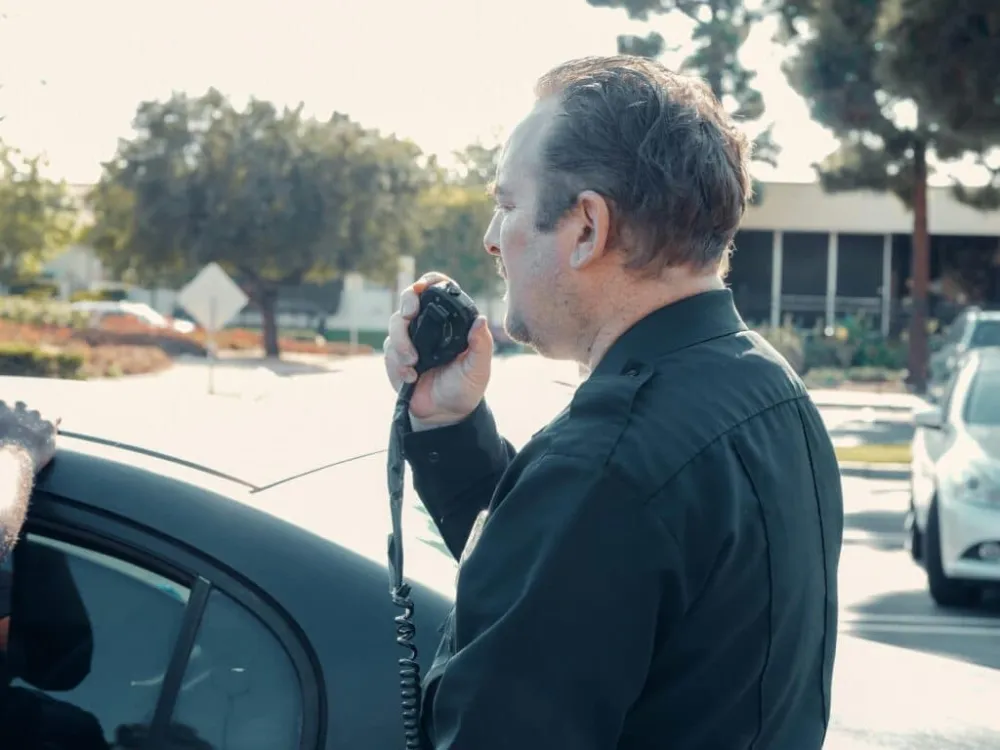
The radio communication used is called Push to talk, or PTT, which literally means “press to speak”. Everything is done through a signal or antenna that captures the speech from a device and sends it via electromagnetic waves to the receiver.
There are push to talk models that have already evolved and turn any mobile device into a radio communicator. In addition to syncing with other software, it has a management platform with geolocation, LGPD compliance, encryption, call recording and a management platform.
It is very complete and protected, aimed solely at the business environment, and it can be synced with other programs and walkie talkies and accessed through an app or via the website.
The goal of radio communication in security work is to:
- Help with real-time communication;
- Optimize the time of calls;
- Protect the information exchanged;
- Have efficient, clear and objective communication;
- Separate personal matters from professional ones;
- Use the equipment in a professional manner;
- Follow the 12 security guard rules more swiftly;
Did you already know these rules?