
After-hours WhatsApp: a labor-lawsuit risk for firms
Work-related messages exchanged on WhatsApp outside of working hours can lead to lawsuits and rulings against companies, which in this case would have to pay overtime or moral damages to their employees.
Brazil is one of the countries that use WhatsApp the most, both professionally and personally. However, corporate use of the app after hours depends on agreements between employer and employee, and it can become evidence against abuses.
How can using WhatsApp after hours harm companies?
According to the Jusbrasil website, Brazil does not have a specific law like France, which adopted the right to disconnect, but the CLT (Brazilian labor law) mentions “telematic and computerized means” when addressing remote work.
If an employee receives messages from their superiors via WhatsApp during rest periods (days off, weekends, or vacation) about work-related matters, they may claim overtime pay, according to Otavio Pinto e Silva, a professor at USP and a partner at the Siqueira Castro firm.
“We are dealing with a technological tool that can keep the worker connected to the company. Requests made by the employer outside working hours can cause the employee to become active during rest time, and that can mean overtime.”
When an employee has to stay constantly attentive to their phone to check for messages from the company, the situation amounts to on-call duty, which must also be paid, according to Pinto e Silva. “In that case, even if the employee is not called in to work, they must be paid for being on call,” he says.
For the lawyer, this general rule can be made more flexible. One way is to include in the employment contract that the worker may be contacted via the app outside regular working hours.
Another option, according to him, is to negotiate with the union of a given category through a collective agreement or convention on the matter.
“The recommendation is for the company to discuss these situations with the union, collectively. This contact situation can be regulated, and the greatest legal certainty comes when this possibility of using [the app] is in the collective agreement,” he says.
Pinto e Silva states that the labor reform allowed unions to make adjustments beyond what is provided for in labor legislation in cases that include on-call arrangements and teleworking.
For Rodrigo Nunes, a partner at the Cascione firm, negotiations are possible, but within the legal limits of the working day, which cannot exceed eight hours a day, with the possibility of two overtime hours.
“WhatsApp messages have been accepted as evidence in the Labor Courts, and reaching the employee outside working hours is making them work,” says Rodrigo Nunes, a partner at Cascione.
If the boss sends an occasional message with a specific question to the employee, it does not constitute overtime, according to him.
“If it is something more time-consuming and frequent, it is work and needs to be paid. The rule is that the employee must have their right to rest respected and should not have their days off and vacation interrupted,” he states.
To mitigate risks, some companies have already begun including the use of the app in terms provided to employees, according to Paulo Sardinha, president of ABRH (the Brazilian Association of Human Resources).
“Companies say they are not to blame, but that will never exempt them from responsibility. Today WhatsApp is clearly connected to companies’ internal policies and codes of ethics.”
For him, the use of the messaging app needs to follow the same rigor as other everyday rules, and groups with colleagues and bosses can be seen as “digital meeting rooms.”
“The rulings against companies, and even personal ones, such as the case of a group administrator who was held responsible for not coordinating people’s behavior, are drawing attention,” he says.
While responding to email outside of work required a certain effort from the worker in the 1990s, who had to turn to the computer, WhatsApp fits into the instant communication of the smartphone, which has brought efficiency, and also risk, to work relationships.
On the employees’ side, a common piece of guidance in the HR field, according to Debora Nascimento, general director of the consultancy Capacitare, is to follow rules and try to organize the routine for using the app, such as replying to non-work-related messages during breaks.
Work messages outside of working hours should be avoided. “Many people worry about not responding and want to show that they are available. There needs to be a clear understanding that everyone is on the same page.”
Behavior in corporate groups, according to her, can be guided by the conduct expected within the company: comments relevant to the topic and “without the use of foul language” –with the added rule of not sending chain messages, memes, or talking about politics.
How can a professional communication app help you with this?
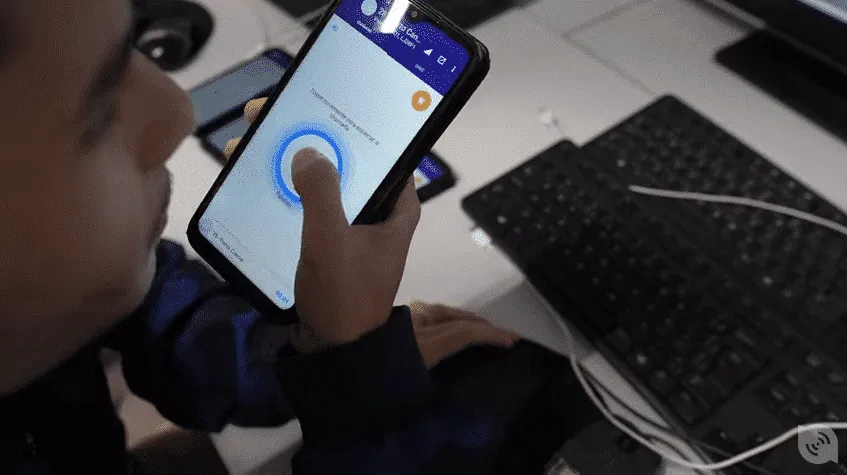
If we think about companies that need fast and effective communication, Push To Talk Software becomes the best option, because with it there will rarely be failures: you will be hearing the voice of the other team member, understanding their intonation, and the words will be spoken clearly.
Unlike text messages, for example, where a team member may misunderstand what is being said or set the message aside and take a long time to respond, which can be a problem in life-threatening situations such as in healthcare and security companies, or in situations that risk losses such as in retail companies.
BiPTT is a Voice Communication for Teams solution designed for use by companies. That is why it offers countless control and management features that are quite valuable in the context of communication between work teams. WhatsApp is an app for personal use, and that is why it lacks the features required for corporate use.
In addition, the platform offers several features that exist in WhatsApp, such as sending text and images and creating groups/channels, with the advantages of secure communication exclusive to teams
Want to learn more about this innovation? Visit our website.
Also read:
WhatsApp: how its instability can harm companies, see 10 examples
A 100% professional communication app for companies
Push To Talk Software vs. WhatsApp: Discover the main differences